Summary: Global waste is set to rise sharply this century driven by population growth, urbanisation, rising incomes, and booming plastics production. That escalation will reshape markets, regulatory pressure, and customer expectations. For 888 Waste (a Melbourne operator), it means growing demand for reliable collection, sorting and end-market solutions and an urgent need to pivot from “transport & tip” to value chain partner in a circular economy.
The headline numbers (what the major reports show)
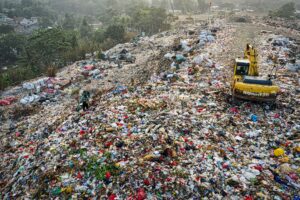
- Municipal solid waste is forecast to climb from ~2.1 billion tonnes in 2023 to about 3.8 billion tonnes by 2050 if current trends continue. UNEP – UN Environment Programme
- Earlier World Bank modelling (What a Waste 2.0) reached a similar order of magnitude, projecting global annual waste rising from ~2.0 billion tonnes (2016) to ≈3.4 billion tonnes by 2050. Data Topics+1
- Plastics are a major driver: without further policy action, plastics production and waste are projected to surge (OECD scenarios show ~70% growth in plastics production/use and large increases in plastic waste by 2040–2060). OECD+1
- New research and policy analyses warn that, unless production and consumption models change, some packaging-driven waste streams (particularly single-use/soft plastics) could multiply dramatically by 2040. Recent studies say packaging waste is a key contributor to rising plastic pollution. The Guardian+1
Why volumes will keep rising (the drivers)
- Urbanisation & population growth — more people in cities generate more municipal solid waste per square kilometre. UNEP – UN Environment Programme
- Economic development & consumption patterns — as incomes rise, so does single-use packaging, electronic goods turnover, and complex multi-material products. Data Topics
- Plastics boom — low cost and versatility have fuelled massive growth in plastics production; without systemic change, much of this becomes waste. OECD
- Uneven waste infrastructure — growth is fastest in regions with the weakest systems (parts of Asia, Sub-Saharan Africa), meaning mismanaged waste — and pollution — will rise unless investments accelerate. UNEP – UN Environment Programme
Consequences for the waste sector & for 888 Waste
- Bigger volumes = bigger logistics & processing demand. Scaling collection, transfer, sorting and transport capabilities will be essential. (Implication: fleet, transfer station throughput, staff, routing systems.) UNEP – UN Environment Programme
- Growing regulatory and social pressure. Governments and international bodies are tightening rules (recycling targets, extended producer responsibility, limits on landfilling/incineration), and public scrutiny of plastics is intensifying. OECD+1
- End-market volatility. More recyclable material doesn’t automatically translate to stable revenues — recycled material markets can be fragile and price-sensitive. OECD
- New business opportunities. Chemical recycling, advanced sorting, organics recovery, e-waste processing, pay-as-you-throw systems, and reverse logistics (takeback/deposit return) will be growth areas. OECD+1
Tactical recommendations for 888 Waste (practical & immediate)
- Model volume scenarios and stress-test capacity. Build 3 scenarios (business-as-usual; moderate growth; high growth) to see where bottlenecks will occur (collection, transfer, sorting). Use these to plan capital spend and staffing. UNEP – UN Environment Programme
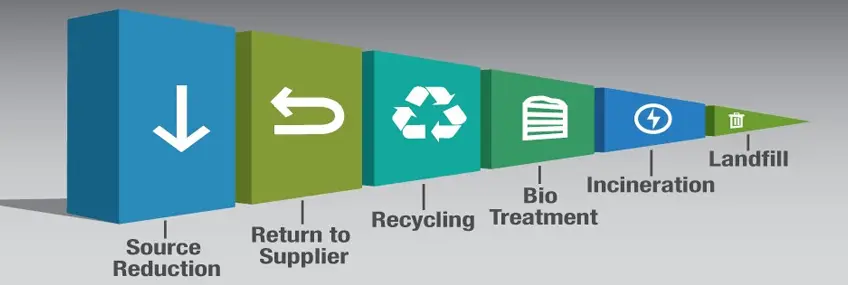
- Invest in multi-stream collection and upstream separation. Capture organics, glass, paper/cardboard, hard plastics and soft plastics separately where practical — separated loads are worth more and are easier to market to processors. UNEP – UN Environment Programme
- Forge offtake / partner agreements with processors. Lock supply deals with local recyclers, chemical-recycling or WtE facilities so increased volumes have reliable end markets or disposal routes. Consider revenue-share or minimum-take contracts. OECD+1
- Upgrade data & traceability. Implement digital manifests, route optimisation and contamination tracking — regulators and large customers increasingly require proof of legal, traceable processing. UNEP – UN Environment Programme
- Pursue circular-economy services. Offer product-stewardship, container takeback, deposit return logistics, and consulting for commercial clients aiming to reduce packaging waste. These services capture higher margins and align with global policy pressure to curb plastics. The Guardian+1
- Advocate & engage in policy dialogues. Participate with industry groups on extended producer responsibility (EPR) schemes and deposit-return systems — early engagement shapes rules and creates new revenue streams (e.g., service contracts with producers). OECD
Strategic (mid-term) moves; 2–5 year horizon
- Capacity for higher throughput at transfer stations (automation, optical sorters, trommels) to handle surges in separated streams. UNEP – UN Environment Programme
- Consider vertical integration (partial ownership or long-term contracts with local recyclers / processors) to stabilise margins and guarantee outlets for materials. OECD
- Pilot chemical-recycling / advanced recycling partnerships for hard-to-process plastics — but only after careful commercial due diligence given immature markets. OECD+1
Risks to manage
- End market price shocks for recyclates.
- Regulatory shifts that change permitted disposal routes (e.g., stricter landfill bans, new EPR fees).
- Community resistance if new infrastructure (e.g., large sort centres or transfer hubs) is sited near residential areas.
- Capital intensity of sorting / pre-processing upgrades.
Bottom line — why act now
Global projections (UNEP, World Bank, OECD and others) point to a steep increase in both total waste and plastic waste this century unless production and waste systems change. That escalation is a double edged sword: it creates demand and market size for competent, compliant waste businesses, but it rewards companies that modernise, diversify and secure end markets. For 888 Waste, the next 24 months are a chance to move from being a local hauler to a strategic circular-economy partner in Melbourne’s evolving waste ecosystem. UNEP – UN Environment Programme+2Data Topics+2